The Star of Bethlehem and the Stone of the empty tomb — everything in-between is Jesus.
The StarStone Fellowship is a congregation that is committed to the Word of God, focused on growing as followers of Jesus, and designed to add blessing to people in the community and around the world. We are Wesleyan believers who find joy in worship and are blessed to serve.
Watch

Don't Pick A Side. Pick Jesus.

Don't Pick A Side. Pick Jesus.
Resilient Family
"Stay Put"
How Can We Pray for You?
Share a prayer request or celebration.
We would be honored to pray with you.
StarStone Fellowship Local Information
Methodist Church Parker CO
Methodist Church Near Me
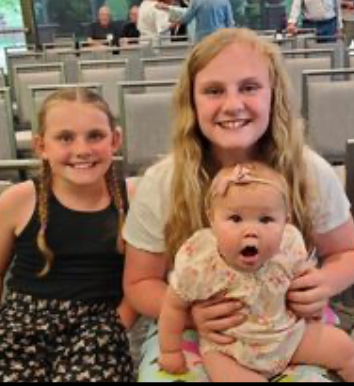
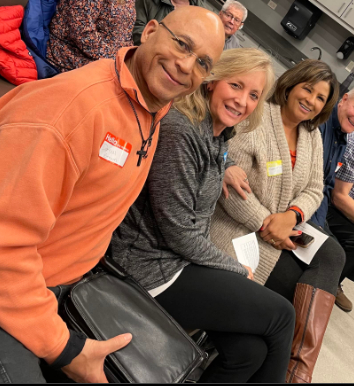
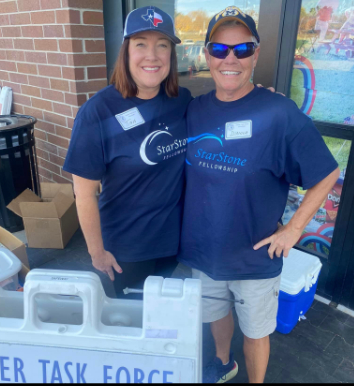
Starstone Fellowship Church was founded in 2022 as a Methodist Church with a Wesleyan affiliation and has been holding a Wednesday night, mid-week church service at the PACE Center in Parker, Colorado. StarStone Fellowship Church ministries include small groups of 3-5 people called “Band Groups” (a product of the Wesleyan-Methodist revival) and a youth group for middle school & high school teens who also meet on Wednesday nights during the regular church service. StarStone Fellowship Church serves the Parker, CO community by serving meals at the Denver Rescue Mission and by providing support to the Parker Task Force food bank. StarStone Fellowship Church serves the global community by partnering with Global Hope in Romania, Kenya, & India.
Address: 10461 S Parker Rd, Parker, CO 80134
Phone Number: +17192442222
Hours: 6:30 pm – 8:00 pm Wednesday
About Parker Colorado:
Parker, Colorado is a rapidly growing suburban town in Douglas County located about 23 miles southeast of Denver, known for blending small-town charm with access to the Denver metropolitan area. Founded in 1864 as a rural stage stop and railroad hub along the Denver and New Orleans Railroad, Parker evolved from a frontier outpost into a modern municipality incorporated in 1981, expanding from fewer than 300 residents to more than 65,000 today. Geographically, Parker sits at approximately 5,900 feet above sea level on Colorado’s Front Range, with Cherry Creek flowing through the area and views of the Rocky Mountains and nearby plains landscapes shaping its outdoor-oriented lifestyle. The town features notable landmarks such as the Parker Arts, Culture & Events (PACE) Center, a focal point for theater, concerts, and community arts, as well as a historic Western-Victorian style downtown, extensive trail systems, and more than 900 acres of open space. Demographically, Parker is considered an affluent, family-friendly suburb with a relatively young median age, high median household income, and a population that is majority White with growing Hispanic, Asian, and multiracial communities. Interesting facts include Parker Colorado’s designation as a Tree City USA, its reputation for preserving a hometown feel despite rapid growth, and annual cultural traditions like community festivals and performing arts events that reinforce its identity as both a historic town and a thriving modern suburb.
Directions from Denver International Airport to Parker to StarStone Fellowship Church:
Methodist Church Reviews for StarStone Fellowship Church:
See why we are among the top-reviewed Methodist Churches in Parker CO:
StarStone Fellowship Church Google Reviews
StarStone Fellowship Church Facebook Reviews
StarStone Fellowship Church Yelp Reviews
StarStone Fellowship Methodist Church Social Media:
Follow along at:
StarStone Fellowship Church on Instagram
StarStone Fellowship Church on YouTube
You may have found us by searching for some other common Methodist Church searches:
Church in Parker CO
Churches in Parker CO
Christian Church in Parker CO
Wesleyan Church in Parker CO
Parker CO Places of Worship
Religious Organization in Parker CO
Religious Institution in Parker CO
Some of our other important Methodist Church service pages:
About StarStone Fellowship
StartStone Fellowship Pastoral Staff
StarStone Fellowship Board
StarStone Fellowship Methodist Church Beliefs
StarStone Fellowship Methodist Church Band Groups
StarStone Fellowship Youth Group
StarStone Fellowship Missions
StarStone Fellowship Connect
StarStone Fellowship Sermons
StarStone Fellowship Get Started
StarStone Fellowship Giving
Parker, Colorado is located in Douglas County, which lies south of the Denver metropolitan area along Colorado’s Front Range.
The counties that border Douglas County are:
- Arapahoe County — to the north and northeast
- Elbert County — to the east
- El Paso County — to the south (home to Colorado Springs)
- Teller County — to the southwest
- Jefferson County — to the northwest
Douglas County is known for sitting between the Denver metro area and the Colorado Springs region, acting as a transition zone between suburban development and more rural Front Range landscapes.
Here’s a simple way to visualize Parker’s position inside Douglas County:
👉 Northeast corner of Douglas County:
Parker sits toward the northeastern edge of the county, very close to the boundary with Arapahoe County. Because of this, Parker feels strongly connected to the southeast Denver metro area even though it is officially in Douglas County.
👉 North of Castle Rock (county seat):
If you picture Douglas County as a tall rectangle, Castle Rock (the county seat) is roughly central, while Parker lies north-northeast of it.
👉 East of Highlands Ranch and Lone Tree:
Large master-planned communities like Highlands Ranch and Lone Tree are located to the northwest. Parker is farther east, with more open plains historically surrounding it.
👉 Along the Cherry Creek corridor:
Cherry Creek runs through the Parker area, helping shape development patterns, parks, trails, and green spaces.
👉 Transition zone between suburbs and plains:
West and northwest Douglas County are more built-up suburban areas connected tightly to Denver, while areas east of Parker transition into more rural prairie landscapes toward Elbert County.
Here’s a very simple compass-style mental map showing where Parker sits inside Douglas County and how things are oriented around it:
NORTH
↑
Arapahoe County
|
Lone Tree / Highlands Ranch
|
(NW) ———————- (NE)
| |
| PARKER | → toward plains / Elbert County
| |
| |
| Castle Rock | (County Seat)
(SW) ———————- (SE)
|
El Paso County
↓
SOUTH
🧭 How to remember it quickly
- North: Parker sits near the northern border of Douglas County, close to Arapahoe County and the southeast Denver suburbs.
- West/Northwest: Highlands Ranch and Lone Tree — more densely developed suburban areas.
- Center/South: Castle Rock, the county seat, lies south of Parker along I-25.
- East: Development opens into rolling prairie and more rural land toward Elbert County.
- South: The county eventually connects toward El Paso County (Colorado Springs area).
Here’s the “locals’ mental map” of Parker — the simple way people in the south-metro Denver area usually describe where it is based on major roads and commuting routes:
NORTH → Denver / Centennial
|
E-470 (toll beltway)
|
I-25 ←—————————-→ Plains / Elbert County
| |
| Parker Rd (CO-83)
| |
| ★ PARKER
| |
| Mainstreet area
|
Castle Rock (south)
🚗 Key roads locals use as reference points
✅ Parker Road (CO-83)
- The main north-south spine through Parker.
- If someone says “I’m on Parker Road,” they’re talking about the central corridor connecting Parker to southeast Denver (northbound) and Franktown/Castle Rock areas (southbound).
- Downtown Parker (Mainstreet area) sits right along this route.
✅ E-470 (toll road)
- Runs east-west just north of Parker.
- Locals think of Parker as “just south of E-470.”
- Fast access to DIA (Denver International Airport), Centennial Airport, and the eastern suburbs.
✅ I-25
- The major north-south interstate west of Parker.
- Parker is usually described as “east of I-25.”
- If you’re heading to downtown Denver or Colorado Springs, many drivers go west to I-25 first.
🧭 How locals casually describe Parker
- “East of I-25, just south of E-470.”
- “Take Parker Road south from Centennial.”
- “Out toward the plains but still Denver metro.”
🧭 Cities and towns around Parker, Colorado
⬆️ North / Northwest
- Centennial — One of the closest neighboring cities; many Parker residents commute here for work and shopping.
- Aurora — Large city northeast of Parker, extending toward Denver and DIA.
- Lone Tree — Upscale suburban area near I-25 with shopping and business centers.
⬅️ West
- Highlands Ranch — Large master-planned community west/northwest of Parker.
- Greenwood Village — Business-oriented area along I-25 (Denver Tech Center region).
⬇️ South / Southwest
- Castle Rock — County seat of Douglas County, located south along I-25.
- Franktown — Smaller rural community southeast of Castle Rock and south of Parker.
➡️ East / Southeast
- Elizabeth — Small town farther east toward open prairie landscapes.
- Foxfield — Small residential community just northeast of Parker.
Here’s a super-simple compass-style diagram showing Parker in the middle with nearby cities positioned the way locals mentally picture them:
NORTH
↑
Aurora
|
Centennial
|
Lone Tree —————— Foxfield
\ /
\ /
\ /
\ /
\ ★ PARKER /
\ /
\ /
\ /
Highlands Ranch Plains / Elizabeth
\ /
\ /
Castle Rock
↓
SOUTH
📬 ZIP codes in and around Parker, Colorado
⭐ Parker (primary ZIP codes)
- 80134 — Main Parker ZIP code; covers most residential neighborhoods and downtown/Mainstreet area.
- 80138 — Eastern and newer-growth areas of Parker and nearby unincorporated Douglas County.
⬆️ North / Northwest (Centennial, Aurora, Lone Tree)
Centennial
- 80015
- 80016
- 80111
- 80112
- 80121
- 80122
Aurora
- 80010
- 80011
- 80012
- 80013
- 80014
- 80015
- 80016
- 80017
- 80018
- 80019
Lone Tree
- 80124
⬅️ West / Northwest (Highlands Ranch, Greenwood Village)
Highlands Ranch
- 80126
- 80129
- 80130
Greenwood Village
- 80111
- 80112
- 80121
⬇️ South / Southwest (Castle Rock, Franktown)
Castle Rock
- 80104
- 80108
- 80109
Franktown
- 80116
➡️ East / Southeast (Foxfield, Elizabeth)
Foxfield
- 80016
Elizabeth
- 80107
🧭 Quick local reference
- 80134 / 80138 = Parker core
- 80015 / 80016 = Parker north + Centennial/Aurora overlap
- 80124 = Lone Tree
- 80126/80129/80130 = Highlands Ranch
- 80104/80108 = Castle Rock
- 80107 = Elizabeth (more rural east)
🗺️ Color-coded ZIP code mental map around Parker
🟦 NORTH
(Centennial / Aurora / Denver direction)
80015 80016 80111 80112
Centennial / Aurora
|
|
🟩 WEST ——————————– 🟨 EAST
(I-25 corridor / DTC side) (Plains / Rural expansion)
80124 (Lone Tree) 80107 (Elizabeth)
80126 80138 (East Parker)
80129 Highlands Ranch
80130 80016 (Foxfield area)
|
|
★ PARKER
80134 / 80138
|
|
80116 (Franktown)
Castle Rock
80104 / 80108 / 80109
🟥 SOUTH
(Castle Rock / Colorado Springs)
🏡 Neighborhoods in and around Parker, Colorado
⭐ Parker neighborhoods (core Parker communities)
These are some of the most well-known residential areas within Parker:
- Stonegate — Large master-planned community near Parker Rd; technically partly in unincorporated Douglas County but closely tied to Parker.
- Canterberry Crossing — Golf-course community with mature landscaping and trails.
- Stroh Ranch — One of Parker’s largest established neighborhoods; very family-oriented.
- The Pinery — Forested, upscale community southeast of downtown Parker with larger lots.
- Clarke Farms — Popular residential neighborhood with parks and community amenities.
- Idylwilde — Newer master-planned community with clubhouse and trails.
- Meridian Village — Located near I-25 access; newer homes and strong commuter appeal.
- Anthology — Newer development east of Parker with modern builds.
- Salisbury Heights — Older established neighborhood close to Mainstreet.
- Downtown/Mainstreet Parker (Old Town) — Historic core with walkability and local businesses.
- Heirloom — Newer community near Chambers Rd and Hess Rd area.
⬆️ Centennial & Aurora neighborhoods (north/northeast of Parker)
In Centennial
- Piney Creek
- Foxridge
- Willow Creek
- Homestead Farm / Homestead in the Willows
- Southglenn area
In Aurora (near Parker side)
- Saddle Rock
- Tallyn’s Reach
- Southshore
- Beacon Point
- Wheatlands
- Murphy Creek
⬅️ Lone Tree & Highlands Ranch neighborhoods (west/northwest)
In Lone Tree
- RidgeGate
- Heritage Hills
- Carriage Club
- Montecito
In Highlands Ranch
- Westridge
- Northridge
- Southridge
- Eastridge
- BackCountry (gated luxury community)
- Firelight
⬇️ Castle Rock & Franktown neighborhoods (south)
In Castle Rock
- The Meadows
- Crystal Valley Ranch
- Founders Village
- Red Hawk
- Terrain
- Castle Pines Village (nearby luxury enclave)
In Franktown
- Russellville area
- Small acreage communities (less formal subdivisions; more rural parcels)
➡️ Foxfield & Elizabeth neighborhoods (east/southeast)
In Foxfield
- Custom estate communities with larger lots (equestrian-focused; fewer named subdivisions)
In Elizabeth
- Spring Valley Ranch
- Gold Creek Valley
- Independence
- Running Brook Estates
🧭 Quick local mental grouping
- Central Parker: Stroh Ranch, Stonegate, Clarke Farms, Idylwilde
- Luxury / wooded feel: The Pinery, Heritage Hills, BackCountry
- Newer builds / expansion: Anthology, Meridian Village, RidgeGate, Terrain
- Acreage & rural lifestyle: Franktown, Elizabeth outskirts, Foxfield
Frequently Asked Methodist Church Questions:
Is a Methodist Church Christian?
Yes, the Methodist Church is a mainstream Protestant Christian denomination. The tradition is called Methodist after the “methodical” nature of its practices, which include Bible readings, daily prayers, charitable works, and regular reception of the Eucharist, among others. It started in 18th century England by the brothers John and Charles Wesley at Oxford, who were ordained as priests in the Church of England and so their liturgy and theology was largely derived from that denomination.
Methodists believe that it is important to advance the cause of the Kingdom of God, to live a holy and a Christlike life. This means a close following of Jesus’ teachings and way of living. To become more like Jesus is the end goal of a Methodist. Methodists believe that this is accomplished by the grace of God and the working of the Holy Spirit, and that this grace is given to all freely. To accept it means to repent of sin and walk in a sanctified new life.
Because of this, Methodists are very active in social justice and charitable causes. Methodists in the 18th & 19th centuries championed the causes of the poor and the downtrodden, forming schools and almshouses, and also campaigned heavily against the trading of slaves.
Liturgically, Methodism owes much to the traditional prayer-book liturgy of the Anglican church. This means things like the traditional Daily Office prayers, including collects, canticles, the Lord’s Prayer, the Creeds, and psalms. Holy Communion is important, and is, along with Baptism, considered to be a Sacrament, and a means of receiving the Holy Spirit. Love-feasts and covenant renewal services are also practiced.
A good grasp of Methodist theology can be found in John’s sermons, and Charles’ hymns. Methodists have a great tradition of singing hymns.
Are Methodist and Wesleyan considered the same denomination?
No, Methodist and Wesleyan are not considered the same denomination, although they share the same theological roots in the teachings of John Wesley. While both follow Wesley’sArminian theology, they are separate denominations with different histories; The Wesleyan Church broke away from the Methodist Episcopal Church in the 1840s over issues regarding slavery and church governance.
Key Distinctions:
Theological Heritage: Both are part of the “Wesleyan” tradition (piety, doctrine, and practice).
Methodist (e.g., United Methodist Church): Generally considered part of the “mainline” Protestant tradition, often with a broader theological spectrum.
The Wesleyan Church: Often more aligned with the “Holiness movement,” focusing on specific doctrines of sanctification, and historically more conservative on social issues compared to the United Methodist Church (UMC).
Historical Splits: The Wesleyan Church was formed in 1843 as an abolitionist split from the Methodist Episcopal Church.
While they share a similar foundation, they operate as distinct organizations with different, though closely related, stances on doctrine and practice.
What is the difference between United Methodist, Global Methodist, and Free Methodist?
The United Methodist Church (UMC) is a large, historically progressive/centrist denomination facing a schism, while the Global Methodist Church (GMC) is a new, conservative breakaway focusing on traditional doctrine. The Free Methodist Church (FMC) is a long-established, smaller, holiness-tradition group emphasizing social justice and doctrinal conservatism. Key differences revolve around theological, social, and structural views:
- United Methodist Church (UMC): A large, global, mainstream Protestant denomination often associated with more liberal or inclusive stances on LGBTQ+ issues and social justice reforms.
- Global Methodist Church (GMC): Founded by those leaving the UMC, it is doctrinally conservative, emphasizing strict adherence to traditional Methodist theology, a higher view of scripture, and stricter regulations on human sexuality.
- Free Methodist Church (FMC): Roots back to 1860, focusing on the “holiness movement,” which combines evangelical, conservative theology with a strong historic commitment to social justice issues like anti-slavery and equality.
Usage Examples & Synonyms
- UMC: “Mainline Protestant,” “Progressive Methodist,” “Inclusivity-focused.” Often seen as the “traditional” choice before recent splits.
- GMC: “Orthodox Methodist,” “Biblically Traditionalist,” “Breakaway Conservative.” A choice for those seeking a more traditional theological framework.
- FMC: “Holiness Methodist,” “Anti-slavery heritage,” “Doctrinally orthodox.” A, distinct, long-term option for those seeking a conservative, yet socially active denomination.
Key Structural Differences
- Leadership: Both UMC and GMC have bishops, but the GMC uses term-limited bishops, while the UMC has lifetime appointments (though this may change).
- Social Views: The GMC maintains strict prohibitions against same-sex marriage and LGBTQ+ clergy, while the UMC has moved toward more inclusive, though still contested, policies.
- Size: The UMC is much larger and more global in reach, while the FMC is smaller and more focused, and the GMC is growing rapidly through departures from the UMC.
What are Methodist beliefs?
Methodist beliefs center on salvation through God’s grace, personal piety, and social holiness, rooted in the teachings of John Wesley. Key tenets include the Trinity, the authority of Scripture (assisted by tradition, reason, and experience), and the belief that all people can be saved. Methodists practice two sacraments—baptism and Holy Communion—and emphasize a life of service to others.
Core Theological Tenets
- Grace: Methodists believe in “prevenient” grace (God’s love preceding100% conscious recognition), “justifying” grace (forgiveness), and “sanctifying” grace (growth in holiness).
- Salvation for All: Unlike Calvinist, Arminian-based Methodism teaches that salvation is available to everyone, and individuals have free will to accept or reject it.
- Scripture, Reason, Tradition, Experience: Known as the “Wesleyan Quadrilateral,” these four sources are used to guide theological thought, with Scripture holding primary authority.
- Christian Perfection: John Wesley taught that Christians can experience a change of heart, becoming perfected in love, or “sanctified,” in this life.
Key Practices and Emphases
- Social Holiness: Methodists believe there is no piety without social action, placing a heavy emphasis on justice, service, and transforming the world.
- Sacraments: They recognize two sacraments: Baptism (often of infants) and Holy Communion (open to all).
- Three General Rules: Formulated by Wesley, these guide daily life: Do no harm, do good, and stay in love with God (ordinances of God).
- Small Groups: A hallmark of Methodism is the use of small groups for accountability, study, and growth.
What happened in the Methodist church split?
The United Methodist Church (UMC) is undergoing a major, historic split driven primarily by long-standing disagreements over LGBTQ+ inclusion, specifically the ordination of gay clergy and the officiating of same-sex marriages. Thousands of conservative congregations are leaving, with many joining the new Global Methodist Church (GMC).
Key Aspects of the Split
- Core Dispute: Conservative members argue that the denomination has moved away from traditional Wesleyan theology, while progressives advocate for full inclusion.
- Scale: Over 7,000 congregations (about a quarter of US churches) have disaffiliated since 2019, making it the largest split since the Civil War.
The Process: - A 2019 vote created a framework for congregations to leave with their property.
- Outcome: The UMC is becoming more progressive on social issues, whereas the Global Methodist Church holds a traditionalist, conservative, and literal view of scripture.
The separation is described as a “divorce,” with many churches in the U.S. South and rural areas leaving, while more progressive, urban churches tend to remain.
What are Wesleyan church beliefs?
The Wesleyan Church is an evangelical Protestant denomination rooted in Methodism and Arminian theology, emphasizing holiness, sanctification, and salvation for all through free will. Key beliefs include the Holy Trinity, the authority of the Bible, prevenient grace, and the call to social action and holy living.
Core Theological Beliefs
- Salvation and Grace: Salvation is available to all, made possible by Christ’s sacrifice. Wesleyans believe in prevenient grace—God’s grace working in individuals before they decide to trust Christ.
- Holiness and Sanctification: A central tenet is that believers are called to be holy in character and conduct, empowered by the Holy Spirit to live transformed lives.
- The Trinity and Scripture: Belief in one God as Father, Son, and Holy Spirit. The Bible is viewed as the inspired and authoritative Word of God.
- Free Will (Arminianism): The church emphasizes human free will in spiritual matters, rejecting the idea of predestination.
Key Distinctives
- The Wesleyan Quadrilateral: Scripture is the primary authority, interpreted through tradition, reason, and experience.
- Social Action: A strong focus on applying Christian principles to social issues, including acts of mercy and justice.
- Sanctity of Life: Life is viewed as a sacred gift from God, guiding their stance on ethical issues.
- Marriage and Sexuality: Sexual relations are defined as being reserved for a marriage between one man and one woman.
Church Mission
Disciple-Making: A mandate to make disciples and reach a lost world.
Unity in Diversity: Emphasis on the value of every person, aiming to be a multiethnic and multigenerational church.